Monday, November 7, 2022

Musings on the hobby...


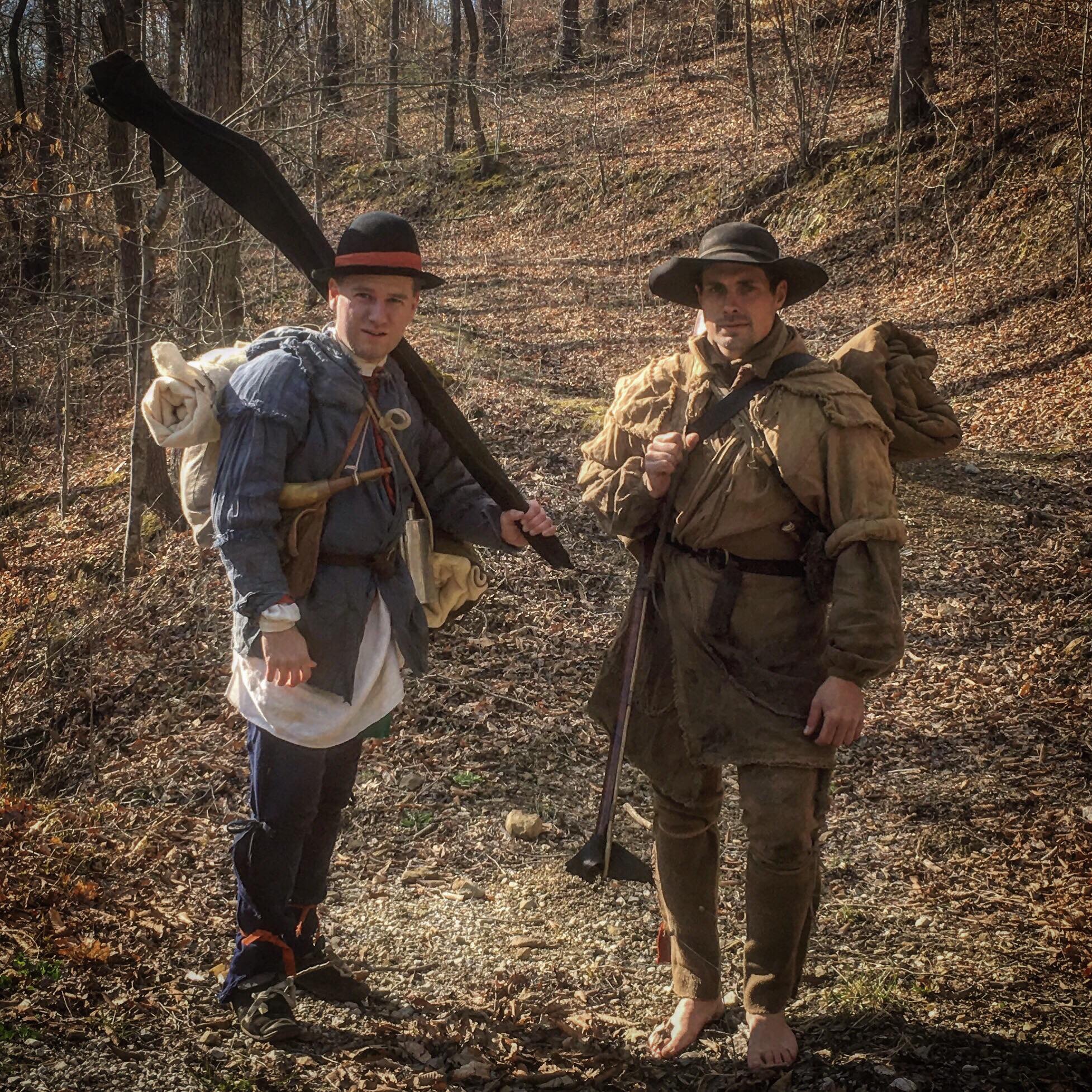
Type in longhunter in google image search, and you'll find any and all sorts of things. I had to scroll down pretty far before I found an image that resembled realities of frontier and backcountry material culture. So why all the misinformation? Fess Parker? Mark Baker? Hawkeye from Last of the Mohicans? Our cultural mythos of the rugged individual and the homespun hero? Our distrust of "facts" in this country? 

Much respect to Mark Baker, but everyone copied this look


    One thing I notice is the myriad of youtube channels now dedicated to a sort of amalgamation of 18th century trekking, modern bushcrafting, shelter building, and shooting/hunting. While I'm glad there's a lot of interest in this subject, I'm sad that so much of what we know through the source material is being pitched to the side in favor of myth and weird bushcraft approaches to 18th century life. 

Nathan Killbuck


    Nathan Killbuck pointed out in a recent interview with I Love Muzzleloading, (that you should check out), that there's so much to be learned by so many different types of folks. From the chrome tan clad ronde goer, to the walnut dyed "longhunter."  And this is true. Much of the knowledge contained in some of these videos on skills are valuable, even in an 18th century context. But sadly, when it comes to the material culture, there seems to be a disconnect. There seems to be an unwillingness to go with the sources, or when the sources are cited, to grossly mishandle the interpretation. 

Heck, even Henry Fonda looked better in the 1940s Drums Along the Mohawk movie than a lot of what I see today 


    So what's to be done? Well, complaining about it sure feels good! But, at the end of the day, complaining never really makes a difference. Arguing also rarely makes a difference. I think the real difference that can be made is to just keep putting the information out there and show up where you can to inspire and gently nudge people towards something better. 

    What inspired this post? Well I had recently watched a video on a youtube channel that I will leave unnamed. There was an interview with an individual who by all accounts is incredibly knowledgeable about backpacking, about being in the woods, and about survival. But also by all accounts has very limited knowledge of period sources and material culture. His kit was assembled more like a modern backpacking or military style pack but out of "period" materials making the mistake a lot of people make which is to retrofit 21st century modes of trekking and "primitive" camping onto the 18th century. It was fairly elaborate, well thought out and over thought out to achieve maximum comfort. But did it reflect what we know from the sources. Sadly, unless there's something I haven't read, no it did not.  

Michael Agee doing this right. Clothing of the common style which fits well, and even riding a horse! 


    Where am I going with this? I don't know. Just sitting here, surrounded by books, thinking out loud, hoping by sending this into the void, I can make myself feel better about the state of things. Honestly, there is a lot to feel good about. The fact that I Love Muzzleloading sought out someone like Nathan Killbuck to interview is a breath of fresh air. Someone who has been banging the drum for us "authentic" weirdos for a long time. I hope to see the material culture, the skills and shooting all come together and be more prevalent on the internet for the sake of those interested in history. 

Until next time....

Monday, October 31, 2022

History is Fragile or Why We Should Care


This past weekend, Eileen and I drove to Western Pennsylvania to see Fort Necessity, Jumonville Glen, and Fort Ligonier. It was a long time coming for me. I was raised on a healthy dose of George Washington history growing up and Fort Necessity had always stood out in my mind. The imagery sparked and fueled my imagination as I spent many hours recreating the battle in the Great Meadow. 

    We arrived at Fort Necessity, toured the museum and then walked towards the meadow through the tree line that once held an army of French and Native allies. A charming field indeed, George. 


    We browsed the small stockade with its breastworks. Amazing to think that many men were piled into such a small space. After inspecting the fort we made for the tree line and looked at things from the French perspective. The trees must have provided very affective cover and made the fort and its defenders sitting ducks. 


    I was over the moon to have gotten to finally set foot on the ground that consumed my imagination for so many years. But it was the next part of the journey that made me take pause. We stopped and ate at Braddocks Inn Restaurant. This place was odd. Nothing in it had anything to do with Braddock or history, but instead it was cowboy themed. A missed opportunity for sure. However, next to the Braddock Inn is a monument to General Braddock, just up the hill from where his remains were discovered in 1804. This realization got my mind thinking as a stood next to the gravel pit and sign that mark his original burial spot. 


    My mind continued to turn as we drove up the road to Jumonville Glen, an area that remains mostly undisturbed from what it was almost 300 years ago. A beautiful rock outcropping that comes down into a bowl in the middle of a draw. A bad spot strategically to make camp. We explored and began to make our way back. 


    The thought had finally come to a point that I could express it allowed. And it is this: 

    History is fragile. Once it happens, it ceases to have the capacity to defend itself from the future. In 1804, some men building a road unearth the body of Braddock. They think. How did they know? Because the local lore was strong enough, preserved enough, that Braddock was able to be identified and given a proper spot and later a monument to his memory. The items and documents that survive history do so because someone valued it enough to protect it, to keep it safe from the perils of every day living. Think of how much we have, and think of all that has been lost to the mists of time. 

    As historical reenactors and living history interpreters, we have such a huge responsibility. It's our voices that give history its voice. Its our actions of preservation that give future generations the ability to experience and share the stories of our past. When we put on our silly clothes and go play at a historic site for the weekend, we should ask ourselves, "Am I doing my best? Does this item or this garment accurately represent our shared story and the people who lived that story?" We are, for many people, the link between what was and what now exists in books and museums. Dressing up and presenting history accurately is an act of preserving our history. We owe it to the past, to the people who went through it, to do our best.


Friday, October 21, 2022

Preparing for your first Immersion Event Part 1 : What is Immersion?

    
     There's many types of reenacting. The most common is the event based reenactment. Usually put on by a historic site or organization complete with food vendors, sutlers and merchants and a military encampment. There are demonstrations throughout the day for school kids and the general public, a battle at 2 O'Clock and that's a wrap. Do that for 2 days, pack up and go home and await the next event. This can be great. The bonds and the friendships made at that style of event is really wonderful.

    The drawbacks to events like that can be that one doesn't get a fully immersive experience. The public is all around you in modern clothing, the parking lot can be seen and sometimes even marched through to get to the battle and modern visitors centers sit next to the site. This is fine if you understand what you're getting yourself into. But for those who want a more in depth experience, there's an alternative option. The Immersion event or tactical. 

    Tacticals and immersive events have been going on since the 1970s with groups doing canoe trips, pack ins and various other hunting and trekking style camps. In the 90s Historical Trekking was all the rage and even had a forum run by On the Trail and Muzzleloader Magazine publisher, Jason Gatliff. Mark Baker and John Curry led and did dozens of immersive treks. Nathan Kobuck, keeper of the oracles of the backcountry, hosted several tacticals. Doc Shaffer's fort in Northeast Ohio has been host to many immersive French and Indian War immersion events. 

    Unlike the normal public attended reenactment, immersion events usually have a scenario or objective, but rarely a decided outcome. Usually there will be an impression agreed upon, guidelines drawn up and followed closely. The two sides will do their best to complete some kind of objective while interacting with the opposing force in a sort of war game. Casualties are done on an honor system. If you know you've been overtaken, give ground. If you'r outnumbered or maneuvered, give ground. 

    The goal of the immersion event is simple: have fun and experience a small taste of military or civilian life in the 18th century. What was it like to be a soldier on the march, to carry your knapsack and food on your back, rifle in hand. To bivouac in a field. It can be a real learning experience that gives you another level of understanding and appreciation for our forefathers. 

    Over the course of the next several posts we will be outlining how to prepare for an immersion. What should you bring and what should you avoid. What will you eat? How will you stay warm? All these questions and more will be answered! 


Sunday, October 16, 2022

13th Virginia at Schoenbrunn Village or Dutch Blankets, Petty Sutlers and The Little Things

Tony Bertalino leads the blankets into Schoenbrunn Village 

    Rare moments in the hobby are not to be missed, and once again Alan Kraus and company delivered. It's usually the little things that make the hobby enjoyable, and while some things seem like a small detail, they can really immerse you in the moment. Anyone can start a unit, tell guys to go out and buy some generic blanket for their impression and call it good. But often in the context of the military, items were purchased in large
quantities and as close to factory made as you could get in the pre industrial age. The continentals in the late 1770s were issued large amounts of "dutch" blankets. 

“DESERTED from Capt. Nathaniel Fox's company of the 6th Virginia, James Anderson, a black soldier, six feet high, about forty years of age ... and fond of liquor; had on when he went away, a light grey cloth coat and waistcoat: the coat faced with green, a pair of oznabrig overalls, and a small round hat with a piece of bear-skin on it: He took with him a pair of leather breeches which he had to clean, and also his firelock, cartridge- box, and new Dutch blanket ... John Gibson, Col. 6th Virginia Reg.” (Pennsylvania Packet, 13 May 1778)

We don't really have a solid idea of what they looked like in terms of stripes etc, so a choice was made and the blankets you see below were issued. Dave Barno did a excellent job of sewing the rolls of blankets up in 2 bundles and we delivered them into camp via packhorse. The blankets were then cut from the roll which made for an excellent interpretive opportunity. 

Captain Kraus cuts his blanket from the roll


    Petty Sutler, Eileen was on hand to offer fresh garden goods and tobacco and secret rum rations to the men of the 13th adding another layer of immersion to the weekend. 

Eileen, petty sutler 

    The 13th was actually in and around the area of Schoenbrunn Village during their deployment and this added another layer of realism. Schoenbrunn Village, founded in 1772 as a Moravian mission among the Delaware Indians, was the first Christian settlement in Ohio. Although the village prospered for several years, pressures from encroaching settlers and British-aligned Indians forced the abandonment of Schoenbrunn in 1777, shortly after the start of the Revolutionary War.

    I was happy to be back in the field doing this again, brushing up on drill and getting my kit up to speed. Hoping to have the regimental coat finished soon and leather accoutrements acquired and made. A great weekend. Looking forward to more. 


Thursday, August 25, 2022

"Halloo! John Cameron!" or The Boys Are Back in Town

 It's been a while, but we are getting things back moving here in the Shirttail Mess slowly but surely. What has changed? Nothing much. Older, not much wiser, but the mission stays the same. Bring authenticity to the backcountry, one stitch and bottle of rum from the stores at Kaskaskia at a time. We have big plans for the new year kicking off with a big immersion event that you won't want to miss. Will Minire, our new friend is doing some incredible native interpretation along with David McClanahan and others. It's a great time for this stuff to be kicking back up again. A lot of young and new blood in the hobby as well as the old hands getting involved. Stay tuned friends! 


Will Minire 


Saturday, July 6, 2019

The History of the Shirttail Mess

Well, it’s a been a while. We’ve been on a bit of a hiatus with the blog due to all sorts of real life happenings. Sometimes the hobbies get put on hold, but hopefully we’ll be rolling out some new blog posts in the future.

 I wanted to give a little story and history about the origins and the purposes of the Shirttail Mess and what it was that caused us to start the group in the first place.
The First Photo of The Shirttail Mess
 The story begins with Myself and Matthew Fennewald. After watching the discussions and seeing the poor quality at many of the Western Theatre events (Kentucky, Ohio, Indiana, Illinois etc.) we decided it was time there be a group of individuals doing well researched impressions at said events. The impressions everybody claimed to be doing, but done with the most recent and best research available to us. We relied heavily on the research of Fred Lucas, Nathan Koebuck and a host of others who have dedicated their free time to wandering the ancient paths of ledgers, diaries, textiles and other archival material. It was our hope to make a place for that research as applied to the western frontier and backcountry of the 1760s and 1770s.

 But it was also our goal to not just compile this research, but to live it and represent it at events all across the Midwest. To create our own space within the walnut, the oiled haversacks and the baggy leggings. To show people a better way and to do so by participation in the events that were riddled with such caricatures. Not in a combative way, but to show up and let what we were doing speak for itself. 

 Our goal as listed on the Facebook group and on this blog was to recreate Soldier and Civilian of the period. Not to have a Hawkeye complex about “I ain’t in no damn militia” simply because we didn’t want to mix it up with the farbs during a cheesy pitched battle on a mowed fort lawn. But to form our own militia and be active. To show that the common criticism that “Progressives just want to stand over there and not be involved” wasn’t true of us (or really any "progressive" reenactors I've ever known). This was discussed multiple times and it was agreed that this is what we intended to do. 


This image was made by Matthew Fennewald as a protest against bias towards the myths of the frontier era. The message of the Shirttail Mess is to put your own desires aside and let the research speak. 

 Then along came the great Internet Raid. A certain Facebook group run by people I will leave unnamed became the place where good research and discussion went to die. Censorship was commonplace. So we revolted. We made a big mess for them to clean up posting dozens of images of our “Crush Cognitive Bias” flyer all at once and after 10 min were promptly removed and blocked from the group. 

 This is when things started to shift in our focus. We became a rather combative group (not really on purpose) with a bit of a reputation that started to leave a bad taste in peoples mouth. Some of these things got back to me from people attending events. We were getting a certain publicity, but not the kind that screams of respect and longevity. That calmed down eventually and I’d say we’re out of the woods on that. 

 But during that time the tone of the group changed. We went from a group that was actively seeking to do soldier and civilian impressions to a group of “sharing research” and that’s been about all we’ve done in the last 2 years. My own frustration at this has caused me to take a step back and reevaluate the mess and see what could be done. It sort of has become its own animal and while that’s not a bad thing, it’s also not what I intended from the outset. Yes, I want the Shirttail Mess to be known for the research we share. But I also want it to be known for participation at events. For doing our own immersion events that inspire people to want to step up their game so they can be involved! 

Shirttail Mess at Fort De Chartres 2017

 Going forward, my hope is to be more active. Life has gotten the best of me lately, but next year the hope is to get out a bit more. 

 I’m calling all able bodied men. If you want to see the Shirttail Mess at events, being soldiers, being civilians, whatever the event calls for then don’t hesitate! Get involved! Hit me up about what you’d like to do and let’s try to get it rolling! 

 -Jake 

Wednesday, May 2, 2018

They Used What Was Available....And We Know What it Was!

A Poorly Researched Impression of one of Morgans Hunters 


"They used what was available"  

  You've probably heard this said before. A very true statement that is used to justify the weirdest fantasy impressions ever, like the one pictured above. Yes that's me back when I based my impression on nothing more than what other people around me were doing and what I read in a Pilgrims Journey (with all due respect to Mr. Baker, but the research has come a long way since then.)

 The beauty of it is.....  WE KNOW WHAT THEY HAD AVAILABLE!!!  Ledgers, journals, inventories, period artwork, and existing artifacts paint a pretty clear picture leaving little to guess on.  Modern publications, google, and facebook groups leave this info literally seconds away from any person in the developed world.

A Well Researched Impression of one of Morgans Hunters


Following that line of thought lets expand on a specific portrayal and what it's based on and in - Morgan's hunters.  Dudes on the farthest reach of the frontier in the late 1760's hunting full time for a living.   The men employed (usually on a monthly salary) by the trading firm of Baynton, Warton and Morgan to supply meat to the soldiers in the Illinois country and through out the Ohio river valley region.  It'd be an easy portrayal to base in all sorts of conjecture and weird material culture, but thankfully they used what was available and we know what they commonly purchased.

Leggings -
May 4, 1768 Edward Ashton purchased "1 pr leggings"
April 20, 1768 Samuel Black purchased "1 pr leggings"
July 26, 1768 Jacob Drinnen purchased "1 pair leggings"
August 4, 1768 Jacob Drinnen purchased "1 pr red stroud leggings"
April 21, 1768 John Higgins purchased "1 pr leggings"
(there is a TON  more but hopefully you get the idea.  Premade wool leggings were commonly used by these guys)

Breach clouts -
April 20, 1768 John Higgins purchased "1 breech clout"
April 20, 1768 Samuel Black purchased "1 breech clout"
April 21 1768 Michael Caple purchased "1 breech clout"
(and on and on and on.  Breach clouts = common.  These too were I'm 99.9% sure wool.  most likely stroud)

Check shirts -
April 21, 1768 Valentine Schope purchased "1 check shirt"
April 21, 1768 John Higgins purchased "1 check shirt"
July 16, 1767 Simon Girty purchased "3 yds of check" "thread" and "making of a shirt"
July 26, 1768 Jacob Drinnen purchased "1 check shirt"
(once again, on and on.  check shirts = common.  A note on check, this should be window pane check, not the big squares of blue and white as is often seen and far more appropriate for curtains than shirts)

Rum -
Too much to even start.  Basically 98% of the hunters working for Morgan were heavy heavy drinkers and enjoyed booze every night, most commonly rum.

Combs.  Shoes.  Hunting frocks (!!!!! What What??!!  Hunting frocks in the 60's and not split open smocks????!!!  Heresy I know.)  Deer hides (for moccs is my theory).  Knives (TRADE KNIVES, not woodberry knives).  Tom hawks.  Pipe tom hawks.  Soap.  Chocolate.  Match coats.  Garters (including "garters of an Indian".  Sorry to the quill workers out there, but these were finger woven, not quilled).  Hat lace.  More rum. Rifles.  Blanket coats.  And more rum.  = all common.

So yeah.  They used what was available.  As should we who choose to portray them.  The chore for us is just figuring out what that was and it really isn't too hard.